Wednesday, August 08, 2007

No me digas

Parece que esta imágen del BB no debe sorprenderme:


You're Spain!

You like rain on the plain, as well as interesting architecture and
a diverse number of races and religions. You like to explore a lot, but sailing,
especially in large groups, never really seems to work out for you. Beware of pirates
and dictators bearing bombs. And for heavens' sake, stop running around bulls!
It's just not safe!


Take the Country Quiz
at the Blue Pyramid


The flag is delightfully familiar since the BB is a vexillophile. I love flags and collect them. Alas, I do not have a flagpole these days. My collection includes 29 countries, a few states, one Canadian province (British Columbia, way cool), and a few others (Episcopal Church, Imperial Russia, United Nations, the rainbow flag, and a couple of homemade ones).

Tuesday, August 07, 2007

Simple Joys


I have been intending for about two years to resume baking bread, something I did often in my junior year of college. (Don't go counting on me, it was long ago in a galaxy far away.)

This spring and summer I have actually done it, using all those wonderful flours I have collected with this very thing in mind. It has been great fun and deeply satisfying.

I use no recipe and to call my loaves "multi-grain" may be an understatement. I just start grabbing tossing into the mix.

Well, it's not quite that haphazard. I start with a sponge that invariably involves a cup of whole wheat flour and two packages of rapid rise yeast. The sponge usually has a bunch of extra gluten and a good cup of oat bran, maybe a little this or that. Water at around 115 degrees Fahrenheit (aren't those instant-read thermometers lovely?). I leave it alone for 20-35 minutes and it doesn't take long before I can smell yeast in the kitchen.

In another bowl I toss all the "exotics" that are going into any given batch: buckwheat flour, rye flour, cornmeal, oatmeal, cracked wheat, sunflower seeds, chopped walnuts, soaked and softened wheat berries, etc. This includes a scant tablespoon of kosher salt. You don't want the salt in the sponge lest it interfere with the yeast early on.

In the mixing bowl goes a bunch of canola oil, 3-4 eggs, one melted stick of butter (I like it rich, thanks, and moist), either honey or cane syrup or both (honey acts as a great preservative).

The sponge and the dry ingredients are added to the wet and I let my trusty Kitchen Aid mixer do the hard work, at least ten minutes of working that dough. I used to use the dough hook but am working on moister mixes and just use the regular beater. I add unbleached white wheat flour until it is fairly thick but not forming a ball.

Then I take it out and put it on the floured counter and knead by hand, adding as much flour as necessary but no more, using my dough scraper. Then I put it in a large bowl with a bit of oil in the bottom, swirl the dough about to coat with oil, turn it over, punch four holes in it to form a cross, invoking the Father, Son, and Holy Spirit as I do so. (I acquired this habit from my Armenian friends and would never make bread without doing this; it is, after all, a sacred act.) Finally, I cover it with plastic wrap so the top doesn't dry out.

I recall reading, zillions of years ago, that 85 degrees is good for bread rising. That is usually in the neighborhood of the ambient temperature in much of my house this summer, so all I have to do is leave it alone for an hour. Bulks up beautifully.

Punch that sucker down, shape some loaves, brush them with beaten egg, slash the tops, turn on the oven to preheat (425º), let loaves rise for maybe half an hour, pop in the oven and immediately turn the heat down to 375º. (Opening the oven drops the temp about 50º so the higher preheat was to keep it at 375 the whole time.) I check in on them around 35 minutes when they are usually done. Cool on racks, though the first slice comes off almost immediately, is slathered with butter, and consumed with ecstasy.

That is hardly a poetic hymn to bread or the baking thereof; more a free-wheeling recipe. There are days I am more prosaic and this is one of them.

With all the oil and honey in the bread, I don't have to refrigerate or freeze it. I usually make three loaves and give one away. The loaves keep perfectly in 1-gallon freezer bags. Of course, they don't have to hang around all that long--who is going to walk past without cutting a slice?

One of the treats I have enjoyed is putting some cream cheese on a small plate and putting it in the microwave for ten seconds. Yes, the usual commercial stuff. After nuking it, the stuff spreads easily. Of course, if you have access to fresh schmear, by all means enjoy! I have to drive across town for that, so usually take this shortcut. Then I slice tomatoes from my yard and put them on the bread and cream cheese. That's it. No salt, nothing added. Just the wonderful nutritious bread, the creaminess, and the sweet tartness and essence of tomato on top. Heaven!

Simple joys.

--the BB

Monday, August 06, 2007

OK, I admit it...

... I've had my nose buried in Harry Potter and the Deathly Hallows for the past few days. I told myself I wouldn't start reading it until I had finished writing my own book and pretty much kept to that. (One little chapter of Rowling before I finished re-reading and proofing my own book). Tonight I finished.

Now back to working on the plotline of my own next book, the immediate sequel of the one just finished. The sum of my fantasy series will be a voluminous as Rowling, though I am certain not as profitable. It would be nice to be published, though.

Right now I am spinning out possibilities. There are just a few "gottas" in the next tale, the rest is all as my whimsy takes me (ah, the motto of Lord Peter's family) and as the story emerges.

There is so much that comes out of an unfolding tale that I had not expected, no matter how detailed my timeline/plotline. I enjoy the surprises.

Marigolds, for no particular reason

I hope y'all are having fun with your summer reading.

Speaking of which, many years ago (it had to be '78, '79, or '80) the book review editor of the Los Angeles Times suggested that instead of fluff one take up the Greek tragedies for summer reading - after all, one has the leisure to do so. I took said editor up on it and read all the extant classical Greek tragedies and most of the comedies. I had a wonderful time doing so. It did help that I had soaked up mythology like a sponge when a young boy and had some background on the tales from my education.

If anyone is looking for a suggestion, I offer the following:
Antigone to remind us that there are higher laws we answer to and the power of the state is not absolute. (First read this in high school and acted out a scene; part of my background in civil disobedience, along with M. L. King, Jr., Gandhi, and Tolstoy.

The Trojan Women by Euripides, whether the play or the fabulous Cacoyannis movie of the play. This reminds us that war has victims, something the Cheney-Bush administration brushes off.

Speaking of whom, a friend I met for lunch today told me Darth Cheney was in town today. I took a bottle of holy water with me when I left the house in case I came anywhere near the Dark Lord. [In my book, Satan is a Cheney wannabe.] Made it to lunch and home again without any sightings. Perhaps I should take some salt, my violet stole, and the Rituale Romanum down to the Rio Grande and bless the entire river to cleanse the whole valley.

Libera nos a malo, Domine!
--the BB

Saturday, August 04, 2007

Why I live where I live

For many months I have been driving past an incredible viewpoint, promising myself that I would drive up there with my camera some day. Last Sunday was that day.

I threaded my way about the bumps and dips of the dirt rode that climbs up to the lip of the mesa, took out my tripod and set it up, attached my camera, and started shooting.

This is a shot of "where I live." You can see the prominent cloud shadow in the foreground. If you head further down the road to the second cloud shadow, I live in that patch. Those who click on the photo to see an enlarged version will realize that I have not been exaggerating when I say I live on the FAR southwest corner of Albuquerque. The road descending from the mesa to slice across the photo is Dennis Chávez (named for a famous NM Senator). When it crosses Coors Boulevard it becomes Rio Bravo and heads east just to the other side of I-25.

To the right of Dennis Chávez you see mostly fields. For that matter, parts of the land on the left (north) side of D.C. are not even in the city limits, though my home is. The construction continues about one mile west of me (nearer the viewer of this photo). Then the land climbs up to the mesa.
That should give you some idea of the view near my home. The photo below is the central segment of the overall view looking east. I shot photos from the north to the east to the south and used software to turn it into a panorama but it was just too big to put on here. This result is with about 1/4 lopped off on either side to give you just the center.

While I no longer see the San Francisco and San Pablo Bays each day, I do see this vast expanse of sky, an "ocean overhead" as someone put it.

Nice to enjoy the beauty of creation now and again and leave politics and ecclesiastical squabbles to the side.

Now, having finished writing my own novel (and had a few copies made), I am going to sit back down with Harry Potter and the Deathly Hallows and do some pleasure reading.
--the BB

Nostalgia isn't what it used to be

"Nostalgia isn't what it used to be" was the title of Simone Signoret's memoir (English edition, Penguin 1979). The title just leaped to mind as I toured through some YouTube videos of Simon and Garfunkel. I fell in love with them from their first album: Saturday Morning 3 a.m. This must have been during my freshman year of college. The Beatles had exploded on the American music scene in my senior year of high school and now here were musicians I related to. The delicious harmonies of S&G would have won me over without the words, but the words made on think. This was more than pop love songs and their oeuvre was full of social observation.

One of the songs that touched me when I was young now has added layers of meaning and experience. I present herewith "Old Friends."

"Old Friends" by Simon & Garfunkel (with bonus of "Feelin' Groovy"):


The widespread sense of alienation and isolation we felt so keenly in the 60s was captured in "I am a Rock," here shown with B&W video of Paul Simon and Art Garfunkel back when. Consider the following words (found here):
I've built walls,
A fortress deep and mighty,
That none may penetrate.


During my adolescence my walls were as much interior as exterior, trying to keep the various aspects of myself from colliding. We're not talking full-on multiple personality disorder but rather a vast expenditure of psychic energy keeping my social-religious-intellectual-sexual-emotional selves from too much interaction on the unspoken assumption that my whole world would collapse if they did. Taking down my inner Berlin Walls was a long process. Mercifully, I now have a sense that I don't switch hats, personalities, or values from one interaction to the next. It's just me, it's all me, and it all belongs together. (Praise King Jesus and Holy Mother Mary, we're talking grace here, and lots of transformation!)

There was also, of course, the outer fortress. My best friend, who is also my ex and who lived with me for 24 years, observed: "You are the most private person I know." Note: the observation comes from the introvert in the relationship. So although, unlike the song, I did not disdain laughter and loving, I also kept a huge defensive wall between the world and my inner self. I can open doors now, but still do so cautiously when we are getting toward the more delicate, raw, and scary bits.

Without further ado: "I am a rock"


If you would like some seriously cool rhythm performance, catch this recording of "Cecilia."

This nostalgia trip was prompted by Nicole Belle of Crooks & Liars, who posted "Bridge over troubled water" for the people of Minneapolis. Rest eternal for those who perished in the bridge collapse, strength and focus for those who rescue and clean up, peace for those who lost loved ones, comfort for the survivors, shame to those who ignore our infrastructure, diligence for those who work to restore and strengthen it, and a pox on Bush for politicizing it (the lying *******).


Hard to believe that I, who never took a piano lesson, obtained the sheet music of this and learned to play it (clumsily, but still...).
--the BB

Wednesday, August 01, 2007

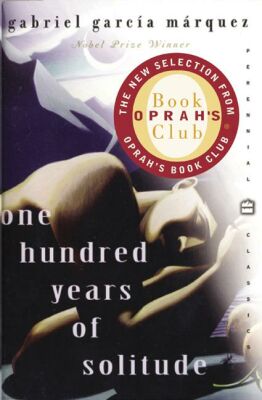
So, I'm a book

Yes, these things are silly. But they're fun. And the world does not yet have enough silliness.


You're One Hundred Years of Solitude!

by Gabriel Garcia Marquez

Lonely and struggling, you've been around for a very long time.
Conflict has filled most of your life and torn apart nearly everyone you know. Yet there
is something majestic and even epic about your presence in the world. You love life all
the more for having seen its decimation. After all, it takes a village.


Take the Book Quiz
at the Blue Pyramid.


Well, I suppose this doesn't make me look very silly. So deep. So tragic. Hmmph. Very silly.
--the BB

Saturday, July 28, 2007

You have, no doubt, wondered

This site is certified 32% EVIL by the Gematriculator

Censure? At the very least!

Think about where we are headed.

Vicarious Repentance

Anskar+ from his retreat at Desert Farne
Father Anskar (clearly a North Atlantic Anglican with a name like that) dons violet vestments and repents on behalf of Anglicans everywhere.

There, now that this has been taken care of, may we all sit at Christ's table and get along now?

h/t to Padre Mickey and the crew for inspiration

WHPC* don't do that stuff

Hard questions? Follow-up questions? The WHPC (White House Press Corpse) surrenders their gonads when they walk into the press room so they can keep their precious access to the Imperial Progaganda Machine, hosted by the WH Spokesliar, Tony McSnowjob.

Yeah, if that bloviating liar who pulls material out of his nether regions, Bill O'Reilly, can label Daily Kos as a hate site, then he can add me to the list. Sooner or later you have to become fed up with the lies, distortions, and mostly monumental stupidity that comes from the Oval Office. I am watching my beloved nation being destroyed from within by presidential (and vice-presidential) attacks on our Constitution and on the best of American values.

Here is what I would like to see asked, but it ain't gonna happen.


If a foreign nation attacked the United States, would you be angry? Of course you would. So don't try to get me to back off by calling me "angry" at what is happening. I am, and that's one proof that I am an American, and a patriot.

The bear is feeling snarly today, just so you know.
--the BB

A Rantlet

Kazan

Amid the many bloggers who post cat photos, I am what one might call a "large dog person." I am fond of my friends' cats, though my allergies keep reminding me to pet with discretion, but the critters I enjoy are big dogs. This is pretty much the attitude of my whole family, which has a number of disparaging terms for small dogs that I will not use here lest I give all manner of offense. We're just not lapdog folks.

As a boy I had two German shepherds (in succession). There was also my imaginary dog as a very young boy, but that is another story altogether. During my college and post-graduate days the family dog was a malemute-samoyed mix whose photo you see above: Kazan.

He was a Christmas present to my mother, who did not think she needed a dog. The whole family came to adore him and view him as the prototypical canine. He was my buddy and I think he viewed me as a big hairless dog. We could wrestle together and if he bit me now and again I would not say "ouch" (which would be fairly meaningless except for tone), I yelped. He would immediately back off. Sometimes I would gently bite him back, which left me picking fur from my mouth.

Kazan was a cookie lover. You had to spell the word in his presence or he dashed to the corner of the kitchen where the cookie tin was kept. He and I would eat Swedish pepper cookies that mother made for Christmas; if I got one, he got one. I did not break of a tiny piece for him. When I spent a year at home and subscribed to the LA Times, he would fetch the paper for a cookie. This meant I could not so much as breathe loudly in bed, because his wet nose would be urging me to get up so he could earn his cookie.

Next Wednesday will be the 26th anniversary of Kazan's death. I fully expect him to be waiting by the pearly gate when I arrive and have informed God that I don't intend to enter unless this is the case. (Don't get all pissy-theological on my ass; one only says this when one has immense trust in God. Animal lovers will also know that I'm not being facetious about this either.)

So, Kazan, Woof, You with the furry face--may you rest in peace and rise with Christ in glory.

Where's the rant? It's this.

Last night I was deep in one of my Cecil B. DeMille dreams, cast of thousands, technicolor, the works, as usual. A bridge of architectural and engineering interest was being discussed (hey, my conscious mind doesn't write these scripts, so don't ask me why). I was dragged from the scene by the repeated loud barking of dogs.

Perhaps it was the soon-to-be-full moon shining so brightly in the high desert sky. I don't know, but the neighborhood was otherwise quiet. I try not to run air-conditioning at night because I love fresh air, I don't want my utility bills to be higher than they are, and I don't want to squander the resources of mother earth. Both my bedroom windows were open, though this also allows lots of light into the room from streetlamps and the outdoor lights of neighbors.

As I emerged into consciousness I realized I had heard the dogs bark in the dream. They went on and on. I looked at the clock. 12:44 AM. Ugh. I managed to get back to sleep eventually but not because the dogs got quiet. Auditory fatigue, perhaps.

This continued with me being awakened again and again. I finally got up at around 3 AM and took a short walk in the warm evening. My street was quiet. The noise was all on the back side, across the major street on which the back of my house faces. I found the yard and the house whence the endless barking emanated. So I know.

I was tempted to knock on the door and let the owners of said dogs share my lack of sleep. But I didn't. I had found out what I wanted to know. I walked back home, closed my windows, turned on the A/C and tried to sleep. It took a long time. One could hear the barking through double-pane windows and blinds but it was muffled enough that it would not wake me again.

This is a new neighborhood. Lots of houses are still not occupied. Old timers are those who have been her more than one year (I reach that mark in a couple more weeks). I want good relationships with my neighbors, not hostile ones. The dog on the north side of me and the dogs across the street are my friends.

The dogs are not the problem. Their owners are. People who allow their dogs to bark all night are not doing a favor to their animals. The dogs are agitated over something and if they bark all night it is not very purposeful agitation. This is not just alerting the household of a passing threat (whether a burglar, a passerby, a cat, a bird, or the wind blowing a dried leaf). Neighbors get agitated. This is the sort of thing that leads sick people to poison other's animals (and I think that is inexcusable, just for the record). It simply raises a level of negative energy in all concerned. My ranting shows I haven't discharged it in myself yet.

I am wrestling with how to do something in a positive, neighborly fashion. This is difficult when one assumes the dog owners must be a******s. I know: never make assumptions.

As we say, pray for me, a sinner.
--the BB

Wednesday, July 25, 2007

A joyous birth

No, I speak of no bairns. However, after fifteen months and twenty-four days I came, last night, to the conclusion of of a grand project. I finished the first draft of my first novel.

The genesis of the whole thing goes back to November 1972 when I wrote a serial bedtime story for fellow grad students at UCLA. There followed a sequel, a novella in about 100 single-spaced pages. I was in full mini-Tolkien mode but did not pursue writing all the chronicles that inhabited my head.

It all came back with a vengeance in early 2006 and I revised the original tale, began rewriting the sequel, started the final story of the cycle, and then realized that perhaps I should begin at the beginning.

That beginning, a story that was only an outline in my head for at least thirty-two years, began to grow on the page (or disk, if you will). The adventure was far grander and more complex than I imagined (though still shorter than the seventh volume of Harry Potter).

It is fun to imagine a world and put it into words. I am now reading the whole thing through from beginning to end for the first time. Great fun.

More news will come with time, but that is the biggest thing in my life this week.
--the BB

Saturday, July 21, 2007

Fr. Tobias knocks it out of the park

Tobias Haller does some fine theological reasoning regarding the ordination of women and concludes with something he wrote much earlier (reproduced below). Read the entire article.

Some twenty years ago, I wrote the following brief comment in the style of Richard Hooker, addressing these questions. I think it still holds up, and so I offer it here, for the first time in the blogosphere:

They say that women may not receive the benefit of the sacrament of order. But how is this; seeing that they may receive the benefit of both of the sacraments ordained by Christ, and may be, as they will admit, the ministers of baptism, which is the prime sacrament of the church’s very being; and seeing that they may alike receive the benefits of the other sacramental rites of the church, in confirmation, penance, matrimony, and unction; wherefore then are they incapable of receiving benefit of this one only sacrament of orders? Is it that they are incapable of receiving this grace, as if they were a material unfit to receive the impress of a seal? What is the grace? and what that receives it? Is there somewhat in male humanity that exists not in the female? Is it not rather that male and female are qualities of the individual person, and not of collective human nature? For humanity as a whole is neither male nor female, but each individual is either one or the other. To say otherwise were an error, since we know that all that is of human nature in woman comes from man, as Eve was taken wholly out of Adam; and further, all that is in human nature resides in woman, for Christ’s humanity came to him wholly by way of his blessed mother, and she could not bestow that which she did not possess: and finally both man and woman come from God as made in God’s image. (1Cor 11.12) So if they say that either humanity or divinity is the form or image that a woman cannot possess, they are mistaken, for she has it both by nature of birth; and further by the grace of baptism whatever of the divine image is marred or obscured in man or woman is restored to its original likeness. Finally, we hold that the grace of the sacraments comes not from the ministers who perform the rites associated thereunto, but from God; and that the lawful performance of a sacramental rite assures us of its validity and of the grace imparted thereby.

Tobias Haller BSG

If you are not familiar with his blog "In a Godward Direction," I commend it to you.

Some good discussion

Fr. Jake and my California friend Richard have some terrific comments on consumerism, the mission of the Church, and related matters.
Fr. Jake being forceful:
Let me say it even more radically. I don't think church has much of anything to do with what people think they "want." I think it has everything to do with offering our praise and thanksgivings to God.

A snippet of Richard:
Another thought came to mind in response to Fr. Jake's reflection: we must be careful when we go out triumphant to slay the beast of consumerism. The culture of consumerism is not problematic because of human desire. The culture of consumerism is problematic because it often fills us up with falsehoods. It responds to real needs with illusory products: with candy rather than solid food, with emptiness rather than substance; and it nurtures greed rather than addressing the authentic desire that can build up and heal the human family.

Check them out by clicking on the links.

Take the hint

A local online dialogue is taking place around the latest missive from the Global South prelates. If Queen Victoria was not amused, it is probably fair to say we were not impressed.

In order to give my comments some context, I am sharing tidbits (with anonymity).

The first observation:
You can usually gauge the level of maturity in a group by their propensity to claim "They made me do it." By that standard, we are not dealing with adults among the Global South Primates.
Another friend writes, tongue-in-cheek:
One would think a group of primates could come up with something genuinely original.
Next comment:
Why are earth do you think a group of primates could come up with anything particularly original. That is a trait I have rarely notice prevalent among bishops, and since I rather skeptically believe advancement in the church more often than not is a result of staying in the middle and being nice and going along to get along, I rather expect primates to be a rather dull lot. The current PB is, I suggest the exception that proves the rule. Is all of that too harsh?
My snarky response:
I would expect a group of prelates to come up with something conformist, fear-based, authoritarian, dualist, and coercive (and, with this group, completely pedestrian, anti-modernist, and vaguely heretical, though they are unaware of the latter). They did not disappoint. My expectations of western hierarchy received a delightful surprise in Vatican II but the Italian Church is busy restoring its dismal reputation these days. Anglicanism is rapidly taking on the worst characteristics of the Roman and Puritan factions it once distinguished itself from.
As my best friend has said on more than one occasion: Everybody's dirty little secret isn't sex; it's power.

Fear does not generate brilliant policy, great theology, or good pastoral care.
All right. Somebody's feeling his Wheaties this morning.

Another friend jumps into the fray:
To Paul's point, I think the COE and TEC positions did suffer all the disadvantageous sins of both the RC and Protestant heresies well into the Nineteenth Century, and what we are facing today is the incompleteness of our "conversion" under the Oxford Movement. I blame a lot, but certainly not all, of this on (1) Cardinal Newman, and (2) the Western and Northern branches of Anglicanism's insistence at ecumenism at all costs. We set ourselves up for a fall and now John Paul and Benedict are driving in the nails to the coffin with the help of the likes of Akinola, Duncan and Iker (who are, ironically, also doing it in the name of ecumenism).
I respond:

This is partly a response to X. and partly, as is obvious, me thinking (typing) out loud again.

By ecumenism do you mean an ill-advised yearning to re-unite with the Italian Church (I love MadPriest's name for Rome), a broader propensity to waffle in order to get along with anyone, or something else? I am guessing you write of the tendency to become more like the RC "one true Church" (thanks, Bennie) with its curial magisterium and insistence upon conformity in opinion and practice, or something like that.

I rather like Quadrilateral-based conversation and collaboration as it strictly limits what is deemed to be at our core Christian identity. [This is not unrelated to the Anglican Church of Canada's recent determination that committed same-gender relationships do not touch "core doctrine" though it is rightly part of doctrine as it involves our understanding of what it means to be human, to incarnate God's love, to be agents of God's reign, to live a sacramental and Christ-like life, etc.] I also prefer identifying and building on what we have in common with others (religiously, culturally, or in any other category), though being honest about where we differ is essential in all true dialogue.

As an historically "broad" church, the COE and its collective offspring will always carry traits of various factions. Some lament and some celebrate the abiding tension of being catholic, evangelical, hierarchical, participatory, traditional, reformed, etc. In an idealized (and illusory) world we would enjoy the best gifts of all these strands while eschewing their flaws and excesses. Alas, we do "suffer the disadvantageous sins" of the whole mess.

I am as unclear on your reference to the RC and Protestant heresies as my readers were, no doubt, unclear on my jab about heretical prelates. Not sure either of us needs to elaborate, just noting.

One Saturday before Palm Sunday I stood in the church parking lot, hosing down palm branches before they could be taken inside the church, and two Jehovah's Witnesses walked by. We chatted briefly. They asked whether I didn't think God wanted us all to worship the same way in heaven.

What an odd question! A friend opined that this would be like a symphony orchestra with only kind of instrument and wondered why on earth (or heaven) God would ever want such a thing. What a hideous thought.

I am aware that we are called to "unity, constancy, and peace," and heartily affirm this when I pray it at the Eucharist, but I fear that a strange kind of likemindedness has become a very great idol of conformity and I dearly wish to see that idol toppled and smashed.


Our unity does not come from thinking alike; it comes from our devotion to One Lord. If we desire unity, then we need to fix our gaze firmly on the pioneer and perfecter of our faith. Unity is a byproduct of our being united together in Christ, and He remains our goal. I repeat, unity is not our goal, it is a byproduct. Christ is our goal.

Frankly, I am tired of communion talk and see it as idolatrous because it has become paramount in too many discussions. I would rather have an untidy collection of sinners at a common table, folks who disagree on all kinds of things yet who know they are all hungry for the grace at that table. They not only don't have to agree, they don't even have to like each other; but they are commanded to love, and that is a commitment to each other's good. The Most Holy Trinity, however, has taught us in Jesus that divine love and commitment to the other's good is not coercive. We could take the hint.

--the BB

Friday, July 20, 2007

Make our ids shudder and swoon


Mark Morford (photo at SFGate)

A friend just pointed me toward one of the most delicious pieces of prose I have read in a while.

Mark Morford, who writes for SFGate (the San Francisco Chronicle and related appendages), writes eloquently of giant squids and what they might represent for us all. I trust that three paragraphs falls within "fair use" parameters.

The giant deep-sea squid is, quite simply, the perfect thing. Unlike UFOs, unlike lizard beings from the fifth dimension, unlike the GOP's heart, we actually we know for certain that it exists, that it has officially moved from the realm of fantasy and ancient mythology into the arena of (potentially) knowable entity, something that actually shares this planet with us and, relatively speaking, isn't all that far away.

And yet, we know next to nothing about these creatures. They live and breed and roam in absolute blackness, in the coldest depths of the ocean, display incredible battle scars and unusual chemical makeup and seem to ooze a sort of delicious nightmarish intelligence, yet we have no real idea just what the hell they do all day and night, way down there. Their world is, in short, so wildly, diametrically opposed to our bright, warmth-craving, sunlit, calamari-loving world, it can only make our ids shudder and swoon.

True, you could say a similar sort of magic exists around other earthly phenomena, like the mysteries of the human mind, of dreams, whale song, dark matter and water crystal formation and, well, love. In fact, you could say that if you care to make even the slightest attempt to tune into it, you'd know we are awash in mystery, drenched to the very core -- we've just forgotten how to let the id roam that particular playground like delirious children stoned on sugar and dragons and stardust.


Go to the original ("Please Never Find A Giant Squid") and read it all. You'll be glad you did.
--the BB

Wednesday, July 18, 2007

Finally, no longer a kiddie site

Free Online Dating

Mingle2 - Free Online Dating


I managed to earn this rating for the following occurrences: "dead" (9x); "pain" (2x); and "breast" (1x).

Quite a change in the space of one day. And I haven't even started any illegal, pre-emptive wars.

--the BB

Honor the dead. Be at peace.

Every other Tuesday I attend a meditation group in a private home. I am undoubtedly one of the world's worst contemplatives but, fortunately, that does not preclude grace. When I meditate, good stuff happens.

Last night I emerged with two phrases bouncing around in my head:
"Honor the dead"

and
"Be at peace"


It is often easy to see whence such thoughts emerge. I am nearing the end of a novel that I began writing almost sixteen months ago. The basic storyline has been in my head for over thirty years but until last April nothing more than ideas and outlines had reached paper. Now it is a vast, sprawling work that has been a joy and revelation to write.

I am in the midst of the chapter that honors the dead. Our heroes have returned from their quest and before the feasting must come the mourning.

I find it difficult to "kill off" my characters. One becomes attached to them. So there is, for me, a very real experience of grief. Scenes such as the one now facing me are very satisfying but also rather difficult to write.

That said, the provenance of the imperative to honor the dead is obvious. But what else are the Spirit and my deeper self telling me?

The recent post about "primal stuff" was a look back at my ancestors and ancestral soil (in terms of where I was born anyway; let's ignore Northern Europe for now). The whole enterprise of writing a cycle of stories is about my interior journey. While my genre is fantasy fiction, I am still following the advice to "write what you know." So I draw on all kinds of mythic themes and the mystery and vagaries of human behavior to tell tales and then sit back to ponder what I am telling myself about myself. The Chronicles are no roman à clef; my life is not narrated in them. Nonetheless, there are not only geographic and narrative snippets lifted from my own experiences but also substantive themes woven throughout. Here is where I see my heart's issues revealed. It is all very healing but now that I have typed this I suddenly feel very vulnerable. Well, that is the price of writing, eh?

This is a photo of my father sitting on his father's lap. It was a very splotchy photo and I tried to clean it up in Photoshop. Doing so was one act of honoring the dead. Grandfather died when I was only six years old, so I have very minimal memories of him. He lived on the farm half an hour south of where we lived, and he was often away supervising construction to earn money to pay for the farm. The only images I have of his face are from photographs.

You see in this photo two perfectionists. Scary stuff. I am a recovering perfectionist.

What struck me about honoring the dead was that we cannot healthily move into the future while either denying the past or running from it, on the one hand, or clinging to it or being trapped in it on the other. By honoring the dead, literally and figuratively, we acknowledge where we come from and have the option to accept and integrate the past. This provides stability and continuity, of course, but it also frees us for the future.

Arlington West, borrowed via Panda Songs

Now I face the task of writing a scene to honor the fallen: a healer, a warmaiden, a merchant, a fearless and foolhardy earl and the soldiers who perished with him, a princess who gave her life to save her daughter, a prince who led his companions to slaughter through pride and envy, victims of plague, victims of a demon. They are fictional echoes of all our race, those who die of disease, accident, war, or simply age. As Linda Loman says in Death of a Salesman, "He's not to be allowed to fall into his grave like an old dog. Attention, attention must finally be paid to such a person."

In order to tell tales and feast the heroes we must first honor those who do not return. They are part of the immense price paid that life may continue. As I have recounted in an earlier post, a flood of tears seems to have been released in me on Memorial Day weekend. My heart has been "tender" ever since. It feels right and good, and ultimately a joyous thing, to have easy access to tears. I have no doubt I will weep as I type because it is not just about my fictional characters, it is about the folly, suffering, and mortality of us all.

Making peace with the past is part of being at peace, and that, I guess, is the link.

Saint Seraphim of Sarov said: "Be at peace within your heart and thousands around you will be saved."

In these troubled times for the Episcopal Church and the Anglican Communion, I suspect that much good might be accomplished by those whose hearts remain at peace, placing their whole faith in God and not being reactive to what others say or do. We have so much positive work to accomplish in faith, hope, and love.

Yes, we must work out issues of estrangement and divorce. Hey, this shit happens to the most wonderful people who do their best to love. [That should take care of my G-rating.] One need not demonize in order to realize that we can't always make our relationships work. We are limited, imperfect, broken, willful creatures, OK? Life gets messy. May we open our hearts to go through such separations as may occur with as much grace, charity, humility, and good will as possible. That way we can look back and bless each other instead of curse. It can be done.

I have always wanted to see a bumpersticker that reads:
May we acknowledge the former and abide in the latter!
--the BB

Baruch atha Adonai Eloheinu

Blessed are You, O Lord our God, Ruler of the universe, who causes bread to come forth from the earth.
Brunch this morning was homemade bread (with whole wheat, buckwheat, oatmeal, and wheat berries): sliced, toasted, spread with cream cheese, and topped with slices of tomatoes from the yard. Lovely. Satisfying.

O taste and see that the Lord is good.
Time to take the last loaf out of the freezer and begin thinking about the next batch of bread.

God is good.

Bishop Gene gives a blessing

As the frame opened I recognized the frontal on the altar from one of my own visits to All Saints, Pasadena. It was at All Saints that I was present when Florence Li Tim-Oi, the first woman priest of the Anglican Communion, presided at the Eucharist. I knew I was present as "history was being made" (if I may invoke a cliché). It is only fitting that Bishop Robinson be at the altar of All Saints now.


Thanks to Father Jake for pointing me to this clip. And thanks to Susan Russell who provides the text as well as the YouTube bit.

MAY GOD BLESS YOU WITH DISCOMFORT AT EASY ANSWERS, HALF TRUTHS, AND SUPERFICIAL RELATIONSHIPS, SO THAT YOU MAY LIVE DEEP WITHIN YOUR HEART. AMEN

MAY GOD BLESS YOU WITH ANGER AT INJUSTICE, OPPRESSION AND EXPLOITATION OF PEOPLE, SO THAT YOU MAY WORK FOR JUSTICE, FREEDOM AND PEACE. AMEN

MAY GOD BLESS YOU WITH TEARS TO SHED FOR THOSE WHO SUFFER FROM PAIN, REJECTION, STARVATION AND WAR, SO THAT YOU MAY REACH OUT YOUR HAND TO COMFORT THEM AND TURN THEIR PAIN INTO JOY. AMEN

MAY GOD BLESS YOU WITH ENOUGH FOOLISHNESS TO BELIEVE THAT YOU CAN MAKE A DIFFERENCE IN THIS WORLD, SO THAT YOU CAN DO WHAT OTHERS CLAIM CANNOT BE DONE. AMEN

[Franciscan Four Fold Blessing]


I borrow shamelessly and am grateful to those who share.
--the BB

Tuesday, July 17, 2007

Learning not to say "never"

This is something I wrote on 6 May 1980 while living in West Hollywood. It is part of a collection called "Letters from Uncle Bear" in which I wrote miscellaneous items for my nieces, nephews, and godchildren, in hopes that some day they would have an idea who I was.
Image courtesy of Goodness Direct
For everything there is a season,
and a time for every matter under heaven.
--Ecclesiastes 3.1

When I was in elementary school I dreaded a certain day of the week (Thursday?). We were permitted to skip one item each day at lunch. If there was one particular taste treat that caused your gorge to rise, you could avoid it altogether. If there were two such dishes served on the same day, you had to consume one of them. The lunch monitors who enforced this undoubtedly occupy their own special circle of the Inferno.

The choice between two noxious dishes might approach a crisis level as you teetered between Scylla and Charybdis, sparing yourself canned spinach only to face an okra soufflé. [OK, I made that last one up.] My cross to bear in those tender days was was the weekly decision between prunes and cottage cheese.

Some of you may ask, "What is wrong with that?" but I trust you would know better than to pose such a question to a seven-year-old boy. I hated them, that's all. Sure, I drank prune juice every day for years, but prunes themselves--yeccch! And it was almost two decades later that I overcame the urge to vomit whenever cottage cheese approached my lips or dwelt in my imagination.
Image courtesy of HP Hood
I thought of all this today as I lunched, by my free choice and preference, on cottage cheese and pineapple, accompanied by dried apricots and prunes. I am gradually learning not to say "never."
A time to cast away stones,
and a time to gather stones together.
--Ecclesiastes 3.5a


Such the original essay. To add further context, the prune juice was to wash down cod liver oil. Because I was a very large boy with rapidly growing bones, my pediatrician (Dr. Nathalie Wolfe of blessed memory) insisted that I get this supplement for Vitamin D. I have adjusted fine to prunes but am still very leery of fish. A friend who also had cod liver oil each morning grew up to love fish, and the "fishier" the better. Life is interesting, no?

Another View

Here is a second scan of the yard, shot from my bedroom window (second floor). This is in sunshine and gives a better overall feel, if no details.


One needs to imagine the entire back yard as a big sandbox with scattered tumbleweeds growing here and there. That was where I began.

If garden blogging is not your cup of tea, stick around. Other stuff gets sprinkled in here too.

It's gotten worse

Online Dating

Mingle2 - Online Dating


I have clearly not been writing enough about our current political situation (extremely dire), the power politics of the Anglican Communion (and its presenting symptoms over sexuality), and the overall ills of the world.

Quick Panoramic Tour

The BB launches his technically-challenged self into the 21st century, with fear and trepidation.

Here is a brief video scanning my back yard from the south wall across the west side and on to the north wall. My apologies for picture quality; this was shot with my cell phone. Freshly deflowered virgins the world over might testify that the first time can sometimes be a bit rough.


This was taken just after I replaced five plants and also put in four new vines.

I hope to get better at this. Blurry as this may all be, you can see that I have been busy.

Sunday, July 15, 2007

Conventionalism

Austin Cline has another terrific Sunday posting over at the General's place. [Surely you know about the "Official Online Organ of the Glorious Conservative Christian Cultural Revolution." It's a great place for clever snark, but that's my inner Frenchman speaking. General J. C. Christian is very serious. ]

Cline discusses "Authoritarian Personality vs. Authoritarian Worldview." He distinguishes between those who need authoritarianism and those who foster it for their own purposes. There can be overlap, of course.

This is one of many discussions about this topic. Cline draws on James Waller's book, Becoming Evil and also refers to Theodor W. Adorno's writing in The Authoritarian Personality.

Here is one provocative sentence (with an epexegetical phrase to clarify what is meant):
Conventionalism [rigid adherence to conventional, middle-class values] appears to be what lies behind all forms of bigotry, discrimination, and exclusion.

Short and interesting article. The BB says "check it out."

Behold the demonic

Frederick Kagan, one of the neo-con architects of Bush’s surge policy. Crooks and Liars says "This is the personification of the banality of evil." Sounds about right to me.

Because we are all created by God and in God's image and bear the light that enlightens everyone that comes into the world, I see no permission for any of us to call another person evil. But "by their fruits you shall know them" and we can discern words and deeds to be evil. I'm just sayin'.

I don't know how we as a society can survive if we tolerate falsehood and cruelty as casually as we note the current temperature and weather.

Check it out.

Primal stuff

Here you go, sports fans: Central California vineyards. I would give excellent odds that these are Thompson seedless being grown either for table grapes or raisins. I am uncertain whether this would be vines owned by Uncle Bob or just some I photographed eons ago while driving around. It is a scan of an old photo taken with an inexpensive camera, so the resolution and color are both anemic.

In any case, THAT'S MY SOIL! My relatives would all laugh at such an extravagant claim, given that I could never pass for anything but a citified bookworm. Still, I think that "roots will out." I may avoid the San Joaquin Valley but I cannot hide from it. (Cf. article below.)

Here is something I wrote on 14 December 1979:

Earth, water, wind, and fire--
These feed my starveling soul.
Intricate rhythms of particular leaves,
branchwoven, splendid, define the sky
and echo the dancing sun.
I take frequent walks
and am often silent.
Farmor said she had two ears
and one mouth.


* Farmor (Swedish for father's mother) refers to my paternal grandmother, Marie Katherine Strid (née Moberg). She was born on 1 December 1887 in Stockholm, Sweden, and came to California with a gracious letter recommending her to care for children. I have a copy of the letter (in Swedish) somewhere. She and Farfar (grandfather) met in Kingsburg, California, a small farming community that once was dominated by its immigrant Swedish population. They were married on 17 December 1907 and my father, the firstborn, came along promptly the following September. Grandmother died on 5 January 1974. My mother died on the same day in 1985. Our neighbor Betty in El Cerrito died on 5 January also. Twelfth Night is always wistful for me.

Although I am hazy on a couple of identifications, we have here the following (l. to r.): Uncle John Calvin (?); Aunt Hazel; Farmor = Grandmother Strid & Farfar = Grandfather Strid; my sisters Iva & Shirley (foreground); my parents Paul (hiding) & Hallie; Great-grandmother Maria Augusta Westin Moberg holding unidentified baby (Cousin Glen?); Aunt May; Uncle Lloyd.

Sunday afternoon garden thoughts

Most of the items in my yard are thriving. I love the bright lemon-yellow splashes of the sundrops (aka Texas primrose). While I am waiting to see them set fruit, the sundry peppers are all growing. I have been harvesting zucchini every few days and it appears that tomorrow morning I can gather a couple of yellow straight-neck squash. The cherry tomatoes are incredibly sweet, though I have given away more than I have sampled myself.

Last night I had a sandwich for supper: some middle eastern flat bread smeared with cream cheese and then some thin ham slices and one of my tomatoes sliced. Several grinds of black pepper and that was it. It was yummy.

Now some things have failed. several of my lavenders have simply not made it. I yanked a couple out and am about to yank a couple more. It is time to replace some things (as I replaced the gazanias with salvia a while ago). So I stopped at the Home Depot garden center on my way home from church this morning.

There is a spot where I had several lavenders and some coral carpet roses. Two of the lavenders are headed to the trash, now to be replaced with another coral rose (with the stunning single blossoms shading from rich coral at the edge to white at the center) and some double purple petunias.

To honor my ancestors, I picked up a small Thompson seedless grapevine. This was the staple of the vineyards around Fresno as I grew up, your basic table grape and the source of all those Fresno County raisins (one-fourth of the world's supply back then). My grandparents and my aunts and uncles grew them and I remember one late summer when we grandchildren were allowed to help roll the raisins up in brown paper. The fine dust of San Joaquin Valley vineyard soil perdures in my memory.

The Thompson seedless can join the flame seedless planted earlier.
Flame seedless gravevine
The two purple potato vines I planted earlier are doing well so I bought two more to replace a couple of plants in the blue border that did not do well. I hope that with the passage of time the potato vines will obscure vast swathes of the south wall. Expanding on Frost: Something there is that does not love a cinder block wall. It is an inexpensive and efficient material for exterior walls but I loathe it on aesthetic grounds.

And so I also picked up two white potato vines and two common trumpet creepers to help obscure and eventually cover more of the walls surrounding my back yard.
Climbing Blaze rose: the first batch of blossoms
Had I the wealth to live in a home with lovely traditional adobe walls, I would enjoy looking at them. Or stone walls, or some kind of rustic wooden fence. But given the situation, I am going for living things to soften and beautify.

Best wishes for an enjoyable, safe, and restorative summer to y'all. And tomatoes that taste like tomatoes!
--the BB

Tuesday, July 10, 2007

Time to update

No matter how much my interior image resists the passage of time, the hour has come and now is to put a current photo in here. Behold, the BB as of today.

Monday, July 09, 2007

Taking the Plunge

It's all Firedoglake's fault.

The gang over there has been forming a group on Facebook and encouraging everyone to join in.

Sigh. What's a techno-luddite to do?

I might have resisted. But I didn't.

My Facebook page is here.

Why does Miss Dickinson come to mind?

I'm nobody. Who are you?
Are nobody too?
Then there's a pair of us. Don't tell.
They'd advertise, you know.

How dreary to be somebody;
How public, like a frog,
To tell your name the livelong day
To an admiring bog.


[If I have misquoted here, chalk it up to memory. This has been with me since high school. Thanks to Mr. Amend for insisting we memorize poetry. He also insisted we call her Miss Dickinson and not just "Emily."]
--the BB

Toward a wholistic theology

Some years ago during one of the annual gatherings of the Council of the Associated Parishes for Liturgy and Mission, the topic of same-sex relationships and liturgies was being discussed. Many contributed to the discussion though I specifically recall Juan Oliver pushing the discussion toward a larger approach.

What I carried away from that particular round of discussion was that we need to do our theology in the broadest and most interrelated fashion possible. In the case of human sexuality, for instance, we need to do more than discuss the topic in terms of creation, theological anthropology, salvation, and sanctification. We need to articulate how we understand human intimacy in terms of our understandings of the Trinity, the Kingdom of God, Incarnation, Church, mission, and all the rest.

An occasional Bible verse will not suffice, nor will invocations of the purpose(s) of sexuality. There is much more involved than revelation (whether viewed as fixed or ongoing) or issues of justice.

I would very much like to know what is being said and written on human intimacy and perichoresis (the mutual interpenetration and indwelling of the Trinity); ways in which human relationships show forth the Reign of God; the role of committed love in manifesting redemption and communicating Good News; inclusive discussions on sexuality and sanctification; ways in which the fruit of the Spirit is nurtured in human relationships of all kinds, etc.

I know these topics are discussed and the preceding paragraph could invite massive compendia of links and bibliographies. My suspicion is that most expressions in these areas come in the form of private discussions, poetry, local liturgies, scattered articles, and the field of pastoral care. My sense is that these topics have been explored widely and, perhaps, quite profoundly. The Episcopal Church did not suddenly or arbitrarily decide it would be good for People of God to have an openly gay bishop. Decades of experience, struggle, and discernment went into the decision. Friends who have met +Gene testify to his compassion, pastorality, and holiness. It would be a blessing if all bishops could be so beloved as he is by those who have come to know him.

Perhaps these random thoughts are a plea for some gifted theologians to compile yet one more discussion of human intimacy (and for God's sake--literally--not just about sexuality) that is tight, coherent, and comprehensive. If what we say about intimacy is not being profoundly related to all the areas of theology, then we risk imbalance and superficiality at best.

I know we can do better than holiness code denunciations on one hand and cries for justice on the other. (Not that I stand in the middle of the discussion; we all know I am way on the side of inclusion, trusting God to have already sanctified creation.*)

Well, just wanted to say it.
--the BB

* Cf. the Eastern Orthodox liturgies of the Theophany (in the Festal Menaion) and Peter's vision of a whole sheetload of critters.

Saturday, July 07, 2007

My Georgia O'Keefe Moment

While watering the garden yesterday morning I looked down at the zucchini patch and the image above greeted me. This necessitated a dash into the house for my camera.

At this point there are daily harvests of a handful of cherry tomatoes. The larger tomatoes have a few shifting into shades of orange but not a ripe red yet. I have harvested three early zukes but there has been a slight pause in production there. The sundry varieties of peppers scattered about the yard are all growing and some blossoming. It will be interesting to see what sort of harvest eventuates.

On a totally unrelated topic, MadPriest's nostalgic romp through the music of the Tribal Rock Musical Hair (here, here, and here - and really, did we need to see the tie-dyed extravaganza? Can no one's past have privacy?) has sent me into a nostalgic time warp, singing along with the music (and recalling probably 90% of the lyrics). [Now, why can't I remember what I was about to do in the present? Sigh.]

I had blessedly softened the memory of just how large a part the drug culture played in the lyrics of the musical and was not offended but definitely startled as I listened again. My memories have focused on what I loved about the musical: its energy, its defiance, its desire to create community without oppressive structures, and its loathing of war. In this it captured much of what I valued then and still value now.

From the standpoint of one rooted in the Church I rather wished the youth of that era (my era) were aware of the life-affirming and liberating aspects of the Gospel that I cherished, rather than seeing the various churches, and "organized religion" in general, as oppressive, stodgy, stultifying, and overall inimical to the human spirit.

To this day I have many friends, and encounter many strangers, who want to affirm their spiritual journey somehow while making it clear that somewhere along the line they have been burned. They drag out the tedious line: "I'm spiritual but I have no use for organized religion."

I think I know what they are trying to say, and I certainly don't cut organized religion much slack myself, but I want to say, "Oh, grow up!" The meme that was just trotted out reeks of adolescent thinking, with a simplistic view of both spirituality and religion.

Religious acts, rites, formulae, beliefs, traditions, etc. that are carried out dutifully but have no insight or passion, no deeper connection between the believer and the Ultimate, are essentially hollow and dead. We all know that. Religion can be quite "unspiritual." The "letter" (the dry external stuff) can kill while the "spirit" gives life. This insight has been around a while, so it's not new. Acknowledging it does not let us off the hook.

So, what are you doing, or going to do, about it? What are you doing for your spirituality? Are you content to leave it floating gaseously in the ether--vague and without direction? Is that going to help you grow in depth, breadth, and fuller life? Will that help you be of some use in the healing of the planet?

Of course, if pressed, folks can name a great deal more about their spiritual principles, but they are usually uncomfortable doing so. There is a great deal they might affirm about the value of creation, of other people, of community, of the way we treat each other, what we are here for, how we should live with one another, and what gives life meaning.

That we need to get to know each other and trust each other before we talk about these things is more than fair.

But where do these values come from? Are they not the teachings of the great wisdom traditions and religions of the world? Why yes, they are. They emerge from the life-giving spirit, not the outward rituals. And these values are part of the general discourse because religious traditions have preserved them, explored them, and express them. A very few of us have independent insights. We are all inheritors and it's a bit churlish to deny whence we receive our gifts.

But how do we live out these beliefs? By putting them into action, embodying them in our words and deeds, doing so in specific places and times--in other words, making them incarnate.

In order for people to do anything together, social organization kicks in. It is reality. It is neutral. Organization may be good, bad, or indifferent. It may enable and enhance the desired activity or stifle and thwart it. It may leave us feeling more alive, more effective, more actualized, or it may leave us drained, frustrated, hurt, and even dehumanized.

If you put your spirituality into action in any manner other than one-on-one, you are participating in organized spirituality. Deal with it.

The word "religion" comes from Latin and refers to that which binds us together. If your spirituality has anything to do with what builds community, it is religious. When you give time to a food bank or ride a bike for AIDS charities or walk or run to fight breast cancer, you are participating in an organized effort that builds community, binds us together, and probably has a spiritual vision behind it.

Ah, you may protest, but I don't have to buy into a belief system when I do those things, so it's not religion.

Ah, I reply, you have already, by your actions, expressed a belief that we are all in this together, that alleviating suffering is an appropriate expression of caring about each other, and I would even wager that behind your actions lies a story about someone you love. A huge complex of beliefs and values lies behind it all.

Some of us see something transcendent (even holy) lying beyond and deeply within all this. Some of us do not. But the line between organized religion and (we don't call it disorganized , do we?) spirituality is really a very fine line, if there is one at all.

As for bodies that intentionally consider themselves religious and organize themselves as such.... If their organization nourishes life, community, wholeness, peace, joy, love, compassion, etc. then being spiritual doesn't preclude any of this. And if their organization does not do this, or does just the opposite, then doesn't being a responsibly spiritual person imply some obligation to change the organization?

OK, not everyone is called to change organizations, especially those with which one does not identify. But I would suggest that responsible spirituality calls for me to live my beliefs (this is not negotiable). Secondly, it invites but does not require me to participate wherever my beliefs can be expressed with folks who share life-nurturing goals. Thirdly, it empowers me to stand up for life and reject that which nourishes and celebrates death (whether that is manifested in social, political, or religious spheres).

One thing being spiritual does not allow is an unexamined life (Socrates told us that a very long time ago), being content with a vague affirmation of rainbows and kittens, and sitting on our asses while people suffer. I don't think most folks who prefer being known as "spiritual" over being thought "religious" are indulging in unexamined lives or indifference. I just think they are more "religious" than they think and that they are fostering a false dichotomy. Religion is what happens when we practice our spirituality.

And, being raised in the United States and nurtured with democratic ideals, I think that in faith matters as well as political ones, We the People have to take responsibility for how we organize to live in community and pursue our inalienable rights.

As Pangloss concludes: Il faut cultiver notre jardin (we must tend our garden).
--the BB

From My Housemates to those of Padre Mickey

Numerous, though not all, members of the BB's family pictured here in our former home in California. Clockwise beginning with the purple-ribboned seated bear: Porphyry, Dillinger, Fr. Anskar, Otter the Great, Manuel Mapache, Margaret Macrina (Maggie), Leo, Paddington, Pample, Thermopylous; on the floor L to R: Hephzibah, Belle, Sally & Jonah; and my father's family in the photo.

Lest the august guardians of Padre Mickey's home (who were certainly left at home during a recent vacation as much to guard the home as for the sake of their safety) feel slighted, they are hereby saluted and duly recognized by my children.

So here's to Gallito Mescalito, Mr. Red Peanut Bank, Mr. Chompy's Chewed-up Kitty Toy, and the Egyptian Hippo of Love from all the kids at Desert Farne.

In further solidarity, the BB wishes to inform Padre Mickey that the BB chats with his kids all the time.

We are also commanded to convey best wishes from His Orthodox Majesty, Maximiliano Cuauhtemoc Juarez Primo, Emperor of El Cerrito, Archduke of Hercules, and Margrave of the Great River ("Cocoa" to his friends). His O. M. is not pictured as he is busy napping in my bed right now.

Some of us feel the world would be saved from much folly and not a little grievous sin if we took ourselves less seriously.
--the BB

Wednesday, July 04, 2007

I'm just saying

"But when a long train of abuses and usurpations, pursuing invariably the same Object evinces a design to reduce them under absolute Despotism, it is their right, it is their duty, to throw off such Government, and to provide new Guards for their future security."
Screw fireworks; remember why this day matters!
--the BB

Wednesday, June 27, 2007

God help me; I'm bland

I have noted of late several blogs showing a rating. Curiosity led me to find out where I might stand. The result:
Online Dating

Mingle2 - Online Dating


How terminally dull of me. The only consolation is that it could have been worse. One mention of "the infernal regions" and two mentions of "enhanced interrogation" got me the PG-13. I euphemize here lest I receive a harsher rating just for this.

I shall try to be more startling in future.
--the BB

Tuesday, June 26, 2007

Bring back John 3:16!

It has been a while since I spotted someone in a crowd holding up a sign that reads "John 3:16." This is probably more because I have not watched many sports events and news programs on the television lately.

I have just been shocked into nostalgia for such signs.

Let's review our Bible, shall we?
ουτως γαρ ηγαπησεν ο θεος τον κοσμον ωστε τον υιον τον μονογενη εδωκεν ινα πας ο πιστευων εις αυτον μη αποληται αλλ εχη ζωην αιωνιον

When I was just a little cub, the very first Bible verse most of us memorized was John 3:16: "For God so loved the world, that he gave his only begotten Son, that whosoever believeth in him should not perish, but have everlasting life."
Kwa maana Mungu aliupenda ulimwengu kiasi cha kumtoa Mwanae pekee, ili kila mtu amwaminiye asipotee, bali awe na uzima wa milele.

I rather like adding the following verse: "For God sent not his Son into the world to condemn the world; but that the world through him might be saved."

I point out that the word the Fourth Evangelist uses for "world" here is the Greek kosmos, a polyvalent word for both the socio-political system that sets itself against God and thus incurs divine judgment and the object of God's love. The evangelist manages not only to live with this tension but to proclaim it. For all that is said about the world, God nonetheless loves it. This is basic Bible 101a stuff.

Porque de tal manera amó Dios al mundo, que dio a su Hijo unigénito, para que todo aquel que cree en El, no se pierda, mas tenga vida eterna.
Although I have, through most of my life, been somewhat put off my chow by folks who do evangelism in the all-up-in-your-grill style (yes, the style in which I was raised), there is no question that John 3:16 is, and always has been, foundational to my understanding of God, Jesus, and issues of salvation. The soteriological message is grounded in, and begins with, the premise that God loves the world. Period. This is our starting point. It is related to the assertion in 1 John 4:8 that "God is love."
Also hat Gott die Welt geliebt, daß er seinen eingeborenen Sohn gab, auf daß alle, die an ihn glauben, nicht verloren werden, sondern das ewige Leben haben.
What sent me flying back to this anchor verse of Scripture was the song "God hates the world," performed here by the folks from Westboro Baptist Church (famous for their website godhatesfags.com - no, I'm not making this up).


http://view.break.com/278059 - Watch more free videos

Watching this video as folks sway and smile while singing about God's hatred is, to put it mildly, unsettling. Not surprising, if one has followed the career of this congregation, headed by Fred Phelps. They are the folks who picket funerals of U. S. troops with their "God hates fags" and "It's too late" signs, proclaiming judgment on our nation for tolerating gays.

The real kick in the gut comes at the end when a very little girl sings the chorus, obviously thrilling to the attention and praise she gets, and then gives a shy smile. The juxtaposition with a theme of hatred is beyond creepy and I don't need to ramble on about it.
Car Dieu a tant aimé le monde qu'il a donné son Fils unique, afin que quiconque croit en lui ne périsse point, mais qu'il ait la vie éternelle.
They have a web page with this glaring title: "'God Loves Everyone': The Greatest Lie Ever Told - 701 Passages Proving God's Wrath & Hate for Most of Mankind."

Now, I remember when I was in my early twenties and wrestled with what I believed. Immense quantities of psychic energy had gone into keeping my worlds compartmentalized throughout childhood and adolescence. Now my worlds were colliding: faith, science, sexuality, politics, reason, emotion--the works. What I had been taught, what I observed, and what I felt were all clashing against each other and I desperately sought some way to bring them into a semblance of relatedness.

As a senior in college I decided to start all over. My guiding principle was "Jesus is mine and I am his and all the rest is up for grabs." Who is God? Who am I? What is the Bible? What is sin? What is salvation? What is a human being? Who is Jesus? Where is meaning found? You know the questions.

Being a lover of the mystery of words (and the Word), I did word studies on sin, salvation, and realated terms. I concluded that sin was about damaged or broken relationship. Because relationship is what matters, beginning with our relationship to God, that is what makes sin so terrible. I rejected dualism, so sin was a subsidiary reality, something that could not even exist without the prior reality of relatedness (cf. Augustine of Hippo and his teaching on evil as the "privatio boni").

For me, "salvation" was right relationship: with God, with oneself, with others, with creation. In this I anticipated the comments about the Messiah in the Catechism of The Book of Common Prayer 1979, but this was back in later college and early Baptist seminary years (1967-1970).

“The Messiah is one sent by God to free us from the power of sin, so that with the help of God we may live in harmony with God, within ourselves, with our neighbors, and with all creation.” (BCP, 849)

This was my vision of "shalom," salvation, eternal life, etc. It is what we are saved FOR, a vital point for someone who had spent the first two decades of his life hearing what we were saved FROM (sin, death, and hell). My question had always been: "I have believed in Christ and accepted God's gift; now what?" My roots were big on saving folks from hell but rather weak on a doctrine of sanctification, or growth in holiness, or journey of faith, or ascetical practices. This is a huge part of why I was attracted to the Roman Catholic and Eastern Orthodox traditions who had more for the faithful to do than collect spiritual scalps through an evangelism that sounded to me more like bad news than Good News.

My friends and family will tell you that I am a pack rat, a collector, someone who had trouble tossing stuff out. This proves true in theology as well. When I find something to be obsolete, irrelevant, or simply not fitting into my "system," I either struggle to redefine it or put it on hold, waiting patiently for the day when it makes sense.
Ибо так возлюбил Бог мир, что отдал Сына Своего Единородного, дабы всякий верующий в Него, не погиб, но имел жизнь вечную.
This is why I could build a theology based on love and inclusion and still refuse to toss out the concept of the wrath of God. When someone I love is hurt, when those I love suffer, I do two things in varying degrees: I grieve and I get angry. It is not all right when evil and injustice are done. Language about God can only be analogous and metaphorical, so I don't assume that God's emotions match and are limited by mine. But I can understand God grieving and fuming at humans wreaking havoc on each other and God's creation. But wrath, divine anger, is subsidiary, a function of love, a manifestation of concern. And if all the parties involved are objects of God's love, it gets complex in a way I cannot sort out, but then I am not God and don't have to try to be God.

Put humorously (I hope my readers can read this for its irony): God hates it when we're hating on each other.

So, if I jettison any concept of divine wrath I run the risk of viewing God as indifferent, which is the opposite of loving.
Deus amou tanto o mundo que deu o seu único Filho para que todo aquele que nele crê não se perca espiritualmente, mas tenha a vida eterna.
All of that is an aside to preclude confusion about whether my understanding of God's love is all nicey-nicey, sugar-coated sentimentality. Sugary religion makes me sick too. But at least I can honor its loving intention.

A religion of hatred, however, is another thing altogether. I don't understand it. I can "get" folks driven by fear of the other into defensiveness, and further driven by fear into hatred, and thence into violence. But attaching that in any way, shape, or form to Jesus.... Simply beyond me.
Koia ano te aroha o te Atua ki te ao, homai ana e ia tana Tama kotahi, kia kahore ai e ngaro te tangata e whakapono ana ki a ia, engari kia whiwhi ai ki te ora tonu.
And thus I want to "go back to basics" - as in, John 3:16. Whatever else we have to say, it all begins here: God so loved the world....

There is also Genesis 1:31:
"And God saw every thing that he had made, and, behold, it was very good. "
We all pick and choose which parts of the Bible and the tradition we emphasize and use as a lens to understand the rest. All of us. Now you know some of mine.
Beloved, let us love one another: for love is of God; and every one that loveth is born of God, and knoweth God. (1 John 4:7)

That's my story, and I'm sticking to it.

--The BB