I have few comments on the death of the late Bishop of Rome and Patriarch of the West, John Paul II. By sheer chance of channel-surfing, I came across his funeral live on C-Span and watched some and slept through much. I was impressed with the simplicity and dignity of the service. Though the workmanship was exquisite, the plain cypress coffin (with an inlay of the pontiff’s armorial symbols, a cross and an M plus beautiful dovetailing) was an elegant and eloquent witness against the excesses of the funeral industry. People strapped for cash lay out thousands of dollars for metal and satin contraptions that, however much we love the deceased, simply holds a corpse until time does its work. Simplicity, function, beauty—these alone suffice.
The banner at the doors of St Peter’s was also elegant—appropriate in its proportions, proclaiming the Resurrection without words through the reproduction of a painting of the risen Christ, framed in crimson hangings to match the papal vestments and the chasubles of the cardinals.
Splendid music. And how lovely the sound of a woman reading the lesson from Acts in Spanish!
Only later did I read that when Dubya appeared on the giant TV screens there arose booing and whistling among the crowd outside St Peter’s Squara. What a grand Italian tradition—one might think one were at La Scala catching a substandard performance. I certainly found it jarring to see him and have to acknowledge my visceral distaste for all he represents. [No, I do not mean America and her ideals which I hold quite separate for anything related to the current administration other than its holding office.] Even more jarring was the sight of Condi Rice after the service, smiling and greeting others. That the US Secretary of State should attend when former President Jimmy Carter wished to be there is simply appalling. I would think a Nobel Peace Prize winner would be more appropriate than one of the architects of our invasion of Iraq. Ah well, seeing Their Most Catholic Majesties Juan Carlos and Sofia in the front row of dignitaries took the edge off my political distaste.
So, the legacy of John Paul II? Mixed. He did reach out to make the church more global; mended some fences with Muslims, Jews, and the Orthodox; spoke out against war as a solution to our problems and against the death penalty; and greatly strengthened the spirit of those resisting communism (while maintaining a clear critique of capitalism’s evils). He spoke on behalf of the poor. Within his value system he was consistent. The articles following his death reminded me of his positive accomplishments.
He was adamantine in his resistance to the equality of women, praising their role in family and church yet supporting the societal and institutional structures that make certain that role remains subservient to male power. No “altar girls” (female acolytes, though the American Catholic Church frequently ignores this silliness); no women priests nor even discussion of it as a theological possibility; no contraception of any kind in spite of the poverty, disease, and political strife that come from overpopulation. Promotion of Opus Dei, the secretive and ultra-conservative organization that works where none may observe (including beatification of its founder). Theological homogenization as the Congregation for Doctrine and Faith (the office formerly known as the Inquisition), headed by Cardinal Ratzinger, quashed free inquiry and debate in many areas and tightened Rome’s reins on the church at large and the clergy in particular. Slowness to address the sexual scandals around pedophile priests (yes, they eventually addressed it, but only under great duress—not unlike presidential commissions formed in spite of the president’s stated desire not to go there).
As I said above: mixed. May he rest in peace, along with Saul Bellow, Terri Schiavo, Archbishop Iakovos, and the tens of thousands of untrumpeted dead who fall victim to famine, flood, disease, war, sundry accidents, and the effects of oppression and corruption. May light perpetual shine upon them and the joys of paradise be their portion.
The BB
Monday, April 11, 2005


Monday, March 28, 2005




Wednesday, March 23, 2005
The Bird Must Die
This morning a small raptor flew into the sweet gum in front of my deck, the one visible from my office window. The coloration and size led me, at first, to think it was a large dove, but even though it was partially obscured by branches with fledgling leaves, revealed that it was a small hawk of some kind, with an inert animal hanging below the branch grasped by its talons.
Raptors have been appearing with some kind of freshness or urgency in my world of late. This, of course, may be entirely subjective; I may only be noticing them with more attention.
My friend Amber has told me that the hawk is an important totem for her and that they have shown themselves to her in unusual circumstances, as though serving as tutelary figures watching over her.
While the usual birds flying about in front of my place are crows and seasonal doves or LBJs (“little brown jobs”)—when unemployed I have spent many daylight hours at the computer with a view out the window—there have this year been lots of turkey vultures hovering in the area and sometimes flying towards and directly over my unit. I usually refer to turkey vultures by the Mexican Spanish term (presumably from the Aztec) “zopilote.” It has a nice ring to it.
That large a bird flying by at close range does get one’s attention. I even composed my own silly song in the shower about it. The verses are already forgotten, but not the chorus.
Zopilote, Zopilote,
I’m still alive as you can plainly see.
Zopilote, Zopilote,
Please don’t try to take a bite of me.
Variant: reprise last line with…
Please don’t try to make your lunch of,
Please don’t try to feed your clan with me.
Amber’s comment on all this is that condors and their cousins are powerful birds that portend death and renewal, the picking clean of our carrion bones so we are freed of encumbrance—ready for resurrection, so to speak. Their appearance to me could thus symbolize a purifying process that will prepare me for whatever is coming next.
As I left for work this morning, I saw by the many small white feathers scattered on the ground that the hawk’s breakfast was a small bird. For the sake of the hawk, the bird had to die. For the sake of what is to come to be in me, the bird must die.
I wonder what unsuspecting bird within me is going to be hawk’s breakfast?
The BB
Raptors have been appearing with some kind of freshness or urgency in my world of late. This, of course, may be entirely subjective; I may only be noticing them with more attention.
My friend Amber has told me that the hawk is an important totem for her and that they have shown themselves to her in unusual circumstances, as though serving as tutelary figures watching over her.
While the usual birds flying about in front of my place are crows and seasonal doves or LBJs (“little brown jobs”)—when unemployed I have spent many daylight hours at the computer with a view out the window—there have this year been lots of turkey vultures hovering in the area and sometimes flying towards and directly over my unit. I usually refer to turkey vultures by the Mexican Spanish term (presumably from the Aztec) “zopilote.” It has a nice ring to it.
That large a bird flying by at close range does get one’s attention. I even composed my own silly song in the shower about it. The verses are already forgotten, but not the chorus.
Zopilote, Zopilote,
I’m still alive as you can plainly see.
Zopilote, Zopilote,
Please don’t try to take a bite of me.
Variant: reprise last line with…
Please don’t try to make your lunch of,
Please don’t try to feed your clan with me.
Amber’s comment on all this is that condors and their cousins are powerful birds that portend death and renewal, the picking clean of our carrion bones so we are freed of encumbrance—ready for resurrection, so to speak. Their appearance to me could thus symbolize a purifying process that will prepare me for whatever is coming next.
As I left for work this morning, I saw by the many small white feathers scattered on the ground that the hawk’s breakfast was a small bird. For the sake of the hawk, the bird had to die. For the sake of what is to come to be in me, the bird must die.
I wonder what unsuspecting bird within me is going to be hawk’s breakfast?
The BB
Tuesday, March 15, 2005
Speaking of the Arctic National Wildlife Refuge
I feel the need to share this:
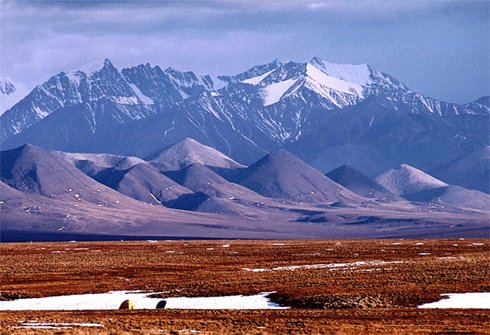
[ENS, Navasota, Texas] - Urging full protection of the Arctic National Wildlife Refuge, the House of Bishops of the Episcopal Church on March 14 adopted a resolution calling upon the U.S. Senate to oppose opening the pristine region to exploration for oil and gas. Alaska Bishop Mark McDonald, a leading voice for environmental protection and ecological justice, left the bishops' spring retreat, in session through March 16, to present the resolution to the press and to lawmakers in Washington, D.C. [Washington Senator Maria Cantwell is leading the opposition to driling, along with John Kerry and others.]
[ENS, Navasota, Texas] - Urging full protection of the Arctic National Wildlife Refuge, the House of Bishops of the Episcopal Church on March 14 adopted a resolution calling upon the U.S. Senate to oppose opening the pristine region to exploration for oil and gas. Alaska Bishop Mark McDonald, a leading voice for environmental protection and ecological justice, left the bishops' spring retreat, in session through March 16, to present the resolution to the press and to lawmakers in Washington, D.C. [Washington Senator Maria Cantwell is leading the opposition to driling, along with John Kerry and others.]
Source: Episcopal News Service [ENS 031405-2]A Message from the House of Bishops of the Episcopal Church, USA, to the United States SenateMarch 14, 2005
Resolved, the House of Bishops of the Episcopal Church, USA, meeting at its Spring 2005 retreat at Camp Allen in Navasota, Texas, March 11-16, 2005, sends to the United States Senate the following message:
As the Bishops of the Episcopal Church, USA, we want to express our commitment to the vision of reconciliation of all peoples and share a common scriptural and theological belief that we have a responsibility to care for God's creation. We support protecting the Arctic National Wildlife Refuge fully. To risk the destruction of an untouched wilderness and an ancient culture violates our theological mandate to be caretakers of creation. Because of these deeply shared values we respectfully ask you to oppose legislation that would facilitate the opening of this sacred space to oil or gas exploration and development in any way. We specifically call on you our Senators to reject efforts to include revenues from lease sales of the Arctic National Wildlife Refuge in the Budget Act currently being considered by Congress.
While the ecological and human rights values of the Arctic National Wildlife Refuge are recognized by many, the cost from exploitation of the potential resources that may exist there does not justify exploration or development. The best estimates tell us that oil from the Refuge as a single source is equal to what the United States would consume in less that one year. Conservation, energy efficiency, and alternative sources of energy can do much more to address our country's energy needs.
The Arctic National Wildlife Refuge is one of the few ecosystems left on earth in its original condition. It is a national treasure and such natural places are anchors in a changing world. They help hold us in place and tell us where we have been; they often can be sources of inspiration and comfort. As Job counsels, "listen to the earth, and it will teach you" (Job 12:8).
The Arctic Refuge is well-known for its Porcupine caribou herd, whose life cycle is dependent on the Refuge as an intact, virtually undisturbed ecosystem. The caribou are a chief link in the subsistence culture for the indigenous Gwich'in people. The Gwich'in call themselves the "Caribou People" and the Arctic Refuge is for them "the Sacred Place where Life Begins." The caribou are essential for Gwich'in cultural, social, and spiritual needs and it has been that way for over 10,000 years. Disturbances that lead to reduced calving success for the caribou may cause significant, irreversible, negative consequences for all involved in this unspoiled web of life.
Pristine places like the Arctic Refuge provide numerous benefits. For humankind, the Arctic is a control environment that helps scientists answer current and future questions in the changing environment. For animal kind, the Arctic is an important habitat and home for many species, including the Arctic peregrine falcon, gyrfalcon, golden eagle, snowshoe hare, ptarmigan, polar bear, grizzly bear, musk ox, threatened spectacled eider, wolves, smaller mammals and water fowl. "The psalmist proclaims, 'O Lord, how manifold are thy works! In wisdom hast thou made them all; the earth is full of your creatures" (Psalm 104).
We recognize that our use of fossil fuels and the resulting global warming has its greatest impact on the poor and vulnerable. Controversy over whether to open the Arctic National Wildlife Refuge to oil development requires us to ask ourselves: what kind of world will we leave to future generations? As Bishops of the Episcopal Church, we are committed to working for a world with justice for indigenous peoples and all creation and we support indigenous peoples' rights as a basic component of a just society. For these reasons and others, we ask you to oppose opening the Arctic National Wildlife Refuge to oil and gas exploration and development.


Judicandus homo reus, huic ergo parce, Deus
Mortal under judgment, guilty--spare this one, O God.
Well, something like that. I am not reaching for my dictionaries or eloquent translations here, just sharing a line from the famous Sequence hymn of the traditional Requiem Mass, the Dies Irae. I had to head this in Latin, because that is the form in which I am familiar with its lines. It was the two words "homo reus" (guilty mortal) that leapt to my mind a few minutes ago.
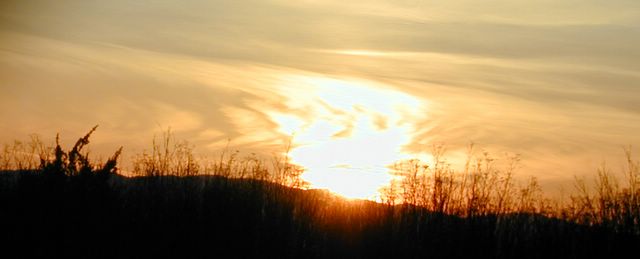
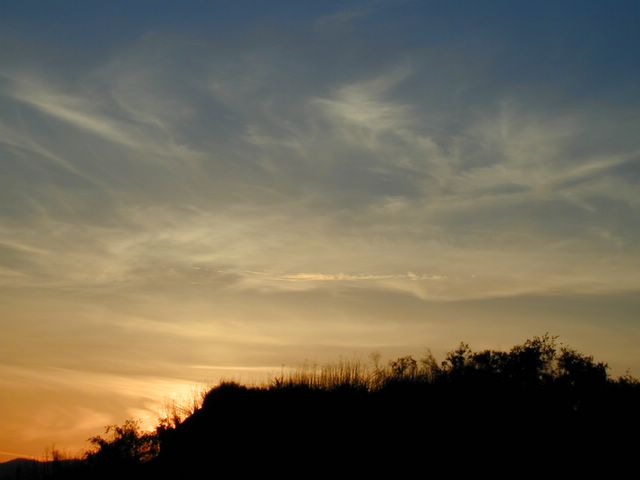
Out the window I could see a tanker leaving a California port, with refineries in the background. Earlier today I had noted a faint brownish tinge to the sky from air pollution (so familiar to me from years in the Los Angeles basin). In a very short time I will be getting into my car to commute home. Not a long commute, but still driving my own car by myself.
Being a native Californian does not excuse me, though my commute would take much longer if I tried to pull it off with public transportation, and I suspect it would involve lots of walking too. The walking would be good for me, but with the demands on my time I do not even try to rationalize driving. I just do it.
One more willing cog in the vast machinery of U.S. oil consumption, our favorite addiction.
Mortal
Under judgment
Guilty
the BB
Well, something like that. I am not reaching for my dictionaries or eloquent translations here, just sharing a line from the famous Sequence hymn of the traditional Requiem Mass, the Dies Irae. I had to head this in Latin, because that is the form in which I am familiar with its lines. It was the two words "homo reus" (guilty mortal) that leapt to my mind a few minutes ago.
Out the window I could see a tanker leaving a California port, with refineries in the background. Earlier today I had noted a faint brownish tinge to the sky from air pollution (so familiar to me from years in the Los Angeles basin). In a very short time I will be getting into my car to commute home. Not a long commute, but still driving my own car by myself.
Being a native Californian does not excuse me, though my commute would take much longer if I tried to pull it off with public transportation, and I suspect it would involve lots of walking too. The walking would be good for me, but with the demands on my time I do not even try to rationalize driving. I just do it.
One more willing cog in the vast machinery of U.S. oil consumption, our favorite addiction.
Mortal
Under judgment
Guilty
the BB
On the matter of abuse
Susan at Suburban Guerrilla has some interesting musings on the issue of abuse. I feel the post is worth sharing. After a quote from Everclear's, "Father of Mine," she goes on to write:
Thanks, Susan, for a great post.
The BB
There's more. Click on the title of this post to read it all.Last night I saw "Raw Boys," an intense play by playwright Dael Orlandersmith. It's about the effect abuse has on two brothers - one a writer, the other an actor.
I know so many men who were badly beaten as children. They're wounded, hostile, mistrusting. The sad thing is, men are still made to feel abuse is relatively normal and only weaklings are affected by it, so they rarely claim that pain. Instead, they stuff it down until it erupts later - on others, or on themselves, via chronic anger, substance abuse or depression.
There's a graphic scene in the play where the father beats and kicks his oldest son. It's all the more powerful because the actors never actually touch; they're at opposite ends of the stage.
It brought back far too many memories. It made me physically sick.
What do you do with all that anger and pain? Where does it go? Look how many men justify how they were treated by repeating it with their own children. "My father did it to me, and I turned out okay."No. No, you didn't, I always tell them.
Thanks, Susan, for a great post.
The BB
Monday, March 14, 2005
eRobin said to steal it, so I did
From the American Street:
Steal This Post
Operating once again under the radar, the Republicans in Congress are doing their best to sneak funding for drilling in ANWR into the federal budget. Want to stop them? Find out how!
Continue reading…
Posted by: eRobin at 8:34 am
Friday, March 11, 2005
A Cultivated Mind
As rain leaks into a poorly roofed house, so does passion invade an uncultivated mind. As no rain leaks into a well-roofed house, passion does not invade a cultivated mind.
--Dhammapada I.13-14
Ay, no wonder I find myself often running in too many directions at once, i.e., not going much of anywhere. The invasion of passions indeed.
Not surprisingly, when I am centered and mindful (cultivating my mind?), I don't get so caught up in illusory foolishness. So, part of Lent is clearly about getting the roof of one's soul in good shape.
The BB
--Dhammapada I.13-14
Ay, no wonder I find myself often running in too many directions at once, i.e., not going much of anywhere. The invasion of passions indeed.
Not surprisingly, when I am centered and mindful (cultivating my mind?), I don't get so caught up in illusory foolishness. So, part of Lent is clearly about getting the roof of one's soul in good shape.
The BB
Tuesday, March 08, 2005

Wednesday, March 02, 2005

Mischief Ever Lurks - Acrostic Poem
Mischief ever lurks in the corners of your eyes, a smile
Underneath the smile of flawless teeth, a playfulness
Sitting, Pucklike, on your brow—you thawed the
Ice that wickedly set my mouth in a Scandinavian line,
Cured my genetic dourness, taught me again to laugh.
How difficult not to be seduced, my full-grown playmate,
Ensorceled by that childlike freedom into wishing you
And I might not have to grow up! I thank you nonetheless for
Risible moments, for teaching me once more to hope, weep,
Dream, dare, let myself be me—to try for something with all my
Soul and body. What a rush! Yet insinuating itself into
Our games there was not only that better, nobler
Dream for each and both, that challenge to
Exert ourselves for something truly worthwhile, to
Earn a happiness we had not dared desire—but also the sickly
Pall of grief, of loss, of not quite reaching our heart’s goal;
Losing something precious, costly, dear; the sober wrench that
Yanks us back into harsh daylight, hard reality, solid ground.
This solid ground is firm, yes, and rock-strewn,
Hazardous, harsh, and hard on naked feet, unguarded souls.
At the core of many salt-water moments, the source of
Tears upwelling in my chest, shaking this solid body—as
If it were a small thing, dry thing, fragile autumn leaf
Tossed back and forth in playful breezes or hurled
In some divine anger (not Juno’s wrath again!) to earth—
Small at first but growing, is this grief, this sorrow:
Not at losing you, though that is ache enough to send me
Over the edge, and does, but my heart’s lament
That you, dear man, sweet man, fine man, good man with a
Heart made for love and hands for kindly deeds, should
Ever fail to see how much you have to give this world
And cannot feel—deep, deep within yourself—how
Rich your gifts and your complexity: your gentleness
Dancing fiercely with manly strength, your
Artist’s yearning after truth and beauty woven
Together with your first-hand knowledge of life’s pain;
All your openness to friendship, family, orphaned animals, a
Love of sky and water, tree and leaf, a joy deep-rooted in
Living—all of this pouring out like sand in an hourglass,
But not from one hour’s chamber to the next—no! Spilt
Upon the ground, pouring from some crack in the glass, some
Torn part of your heart, some little crack through which
Your hope, your love of self, your pain, your fear all rush
Out, soaked in seeming seconds into the earth, instantly,
Utterly gone, lost, unrecognized. You and I, my fellow fool,
Are alike in this, watching precious hours vanish with little
Real and lasting stuff to show for them. We are such slaves,
Each in his own way, to our fears and hurts, old wounds.
Terry, what would happen if we could resolve to
Hold our hearts open, our ears alert, our eyes ever seeking—
Each moment that we have—to Life, not fear? What
Might then come about? What healing waters lie
Under the deceptive surface of our turbulent, wasted days?
Surely the power that set this amazing universe
Into being, into action, into a dance of variety,
Complexity, and some strange balance of compassion and beauty
Will reveal at least a hint of our potential, and with
Heart-breaking (for we need our hearts broken open again)
Invitation call us back to life worth living!
Let Shawn’s passing before us, my brother-in-law’s daily wasting
(Eaten by disease), the news of every terror on this earth
Teach us not that all is vain but that each new hurt and
Horror calls us to learn from pain, from failure, from futility;
Each moment reveals itself as fresh opportunity to be the
Men that we were created to become. Even our wildest
Urges give flesh and voice to that creative fire, that
Spirit that gives life and binds all things together.
I weep, yes, to think your dreams are circumscribed,
Contained by something way too small, inadequate.
Lad, it is not too late to take our next small step
And say Yes to God, to Life, to Joy, to deepest Reality, to
Sit still that we may listen to our heart’s deepest yearning,
To want more, and more, and even more for ourselves, for
Such (believe it or not) is Heaven’s will. Dream deeply, dare bravely. Be!
July 20, 2002
For most of us, there is only the unattended
Moment, the moment in and out of time,
The distraction fit, lost in a shaft of sunlight,
The wild thyme unseen, or the winter lightning
Or the waterfall, or music heard so deeply
That it is not heard at all, but you are the music
While the music lasts.
—From “The Dry Salvages” from Four Quartets by T. S. Eliot
Underneath the smile of flawless teeth, a playfulness
Sitting, Pucklike, on your brow—you thawed the
Ice that wickedly set my mouth in a Scandinavian line,
Cured my genetic dourness, taught me again to laugh.
How difficult not to be seduced, my full-grown playmate,
Ensorceled by that childlike freedom into wishing you
And I might not have to grow up! I thank you nonetheless for
Risible moments, for teaching me once more to hope, weep,
Dream, dare, let myself be me—to try for something with all my
Soul and body. What a rush! Yet insinuating itself into
Our games there was not only that better, nobler
Dream for each and both, that challenge to
Exert ourselves for something truly worthwhile, to
Earn a happiness we had not dared desire—but also the sickly
Pall of grief, of loss, of not quite reaching our heart’s goal;
Losing something precious, costly, dear; the sober wrench that
Yanks us back into harsh daylight, hard reality, solid ground.
This solid ground is firm, yes, and rock-strewn,
Hazardous, harsh, and hard on naked feet, unguarded souls.
At the core of many salt-water moments, the source of
Tears upwelling in my chest, shaking this solid body—as
If it were a small thing, dry thing, fragile autumn leaf
Tossed back and forth in playful breezes or hurled
In some divine anger (not Juno’s wrath again!) to earth—
Small at first but growing, is this grief, this sorrow:
Not at losing you, though that is ache enough to send me
Over the edge, and does, but my heart’s lament
That you, dear man, sweet man, fine man, good man with a
Heart made for love and hands for kindly deeds, should
Ever fail to see how much you have to give this world
And cannot feel—deep, deep within yourself—how
Rich your gifts and your complexity: your gentleness
Dancing fiercely with manly strength, your
Artist’s yearning after truth and beauty woven
Together with your first-hand knowledge of life’s pain;
All your openness to friendship, family, orphaned animals, a
Love of sky and water, tree and leaf, a joy deep-rooted in
Living—all of this pouring out like sand in an hourglass,
But not from one hour’s chamber to the next—no! Spilt
Upon the ground, pouring from some crack in the glass, some
Torn part of your heart, some little crack through which
Your hope, your love of self, your pain, your fear all rush
Out, soaked in seeming seconds into the earth, instantly,
Utterly gone, lost, unrecognized. You and I, my fellow fool,
Are alike in this, watching precious hours vanish with little
Real and lasting stuff to show for them. We are such slaves,
Each in his own way, to our fears and hurts, old wounds.
Terry, what would happen if we could resolve to
Hold our hearts open, our ears alert, our eyes ever seeking—
Each moment that we have—to Life, not fear? What
Might then come about? What healing waters lie
Under the deceptive surface of our turbulent, wasted days?
Surely the power that set this amazing universe
Into being, into action, into a dance of variety,
Complexity, and some strange balance of compassion and beauty
Will reveal at least a hint of our potential, and with
Heart-breaking (for we need our hearts broken open again)
Invitation call us back to life worth living!
Let Shawn’s passing before us, my brother-in-law’s daily wasting
(Eaten by disease), the news of every terror on this earth
Teach us not that all is vain but that each new hurt and
Horror calls us to learn from pain, from failure, from futility;
Each moment reveals itself as fresh opportunity to be the
Men that we were created to become. Even our wildest
Urges give flesh and voice to that creative fire, that
Spirit that gives life and binds all things together.
I weep, yes, to think your dreams are circumscribed,
Contained by something way too small, inadequate.
Lad, it is not too late to take our next small step
And say Yes to God, to Life, to Joy, to deepest Reality, to
Sit still that we may listen to our heart’s deepest yearning,
To want more, and more, and even more for ourselves, for
Such (believe it or not) is Heaven’s will. Dream deeply, dare bravely. Be!
July 20, 2002
For most of us, there is only the unattended
Moment, the moment in and out of time,
The distraction fit, lost in a shaft of sunlight,
The wild thyme unseen, or the winter lightning
Or the waterfall, or music heard so deeply
That it is not heard at all, but you are the music
While the music lasts.
—From “The Dry Salvages” from Four Quartets by T. S. Eliot
Subscribe to:
Posts (Atom)
